FANFARE reviews Fumée, new release on Neuma Records...
Geoffrey Gordon is a composer who, once discovered, reaps many, many rewards. There are two interviews by myself with Gordon in Fanfare: the first, The Cello as Narrator, is in Fanfare 43:6 and around the BIS Records disc of Gordon’s Cello Concerto (after Thomas Mann’s Doktor Faustus), Fathoms, and Ode to a Nightingale; the second, Mythologies and Mad Songs, concerns Gordon’s Orchid Classics disc of ICE, Mad Song, and Prometheus (Fanfare 48:2).
But perhaps the most relevant past review here is the review of a Toccata Next disc of concertos for bass clarinet and orchestra (Fanfare 49:2, reviewed by Henry Fogel): Gordon’s Prometheus is a fabulous work of distinction, formally beautiful and musically possessed of the darkest magic; this new Neuma offering includes Gordon’s Fumée for B♭ clarinet and orchestra (and the Debussy Première Rhapsodie).
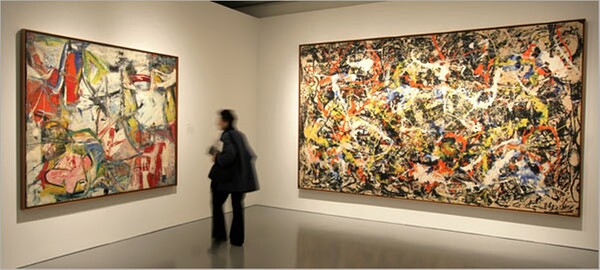
This disc starts with Gotham News for string orchestra of 2018, however, inspired by a 1955 painting by Abstract Expressionist painter Willem de Kooning (reproduced in the booklet) and the specific quotation around that painting, “If it could talk, the work would yell.” It is therefore a representation of the fabled explosive energy of New York. Gordon’s response to the painting is one of irrepressible energy: strings-only this might be, but don’t go expecting any English pastoralism. We are miles away from David Chesky’s New York pieces (whether Rags, or Chorinhos, or Variations: see Fanfare 37:3, and 34:5, respectively, for Rags and Variations): Gordon’s music is infinitely more sophisticated than Chesky’s. But both are different views on exactly the same phenomenon, and both are effective in their own way. Gordon’s music does let in a lyricism rooted in angst, though, perhaps catalyzed by New York’s freneticism, but seemingly speaking of a deeper soul-seated malaise. This is a terrific performance, beautifully recorded: there is real heft to the Radom Chamber Orchestra’s bass end, and the upper strings are caught with real presence (neither recording nor playing exhibits any unwanted edge, however). Slitherings imply the music is straining to contain itself (much like de Kooning’s painterly overload), while insistent repetitions of apoggiatura-like figures reflect sighs and screams. A most powerful piece....it remains impossible not to be affected by this music.
It is quite a way from that to Debussy, and Fumée’s bedfellow, the Première Rhapsodie. This is much more familiar territory for many listeners; and yet heard after Gotham News, its heady Impressionism seems disturbed at a quiet, but fundamental level: it is not quite the quiet plateau one might expect. The performance is beautiful. This is an orchestration made by Gordon to match that of Fumée, as the two were partner pieces at the premiere, a Lausanne Chamber Orchestra commission (expanded to include the Swedish Chamber Orchestra, The Saint Paul Chamber Orchestra, and the ensemble here, the Hong Kong Sinfonietta). Both the arrangement and Fumée date from 2021. The title of Gordon’s work comes not from Debussy, though, but Reynaldo Hahn, and his gorgeous chanson Fumée (first published Heugel, 1896). There is a certain haze about Gordon’s opening, for sure. The use of tutti clarinets (including bass clarinet) and solo is interesting, the orchestra an oscillating bed of sound. And how skillfully the Impressionist references are included: I defy you not to smile at the cleverness. But it is more than that: Gordon has thought about this conversation not just between clarinets, but between epochs, very carefully. There is surely a lean-in toward a certain post-meridian faun, too. In both pieces, the Hong Kong Sinfonietta excels under the experienced lead of Christoph Poppen. Ferreira is a wonderful player, of golden tone and a born storyteller (as this music, very much, demands); his technique, too, is faultless.
Finally, a piece influenced by the early 20th-century ideas of synchromism, an American current of a movement founded by American artists Stanton Macdonald-Wright and Morgan Russel (in 1912, in Paris, France). This is not a direct reference to synesthesia: instead, the parallel is that canvases hold colors that “sing” with or against each other; visual rhythm and counterpoint is also part of this. Paintings are described as “synchromies”; as Macdonald-Wright explained, “synchromism simply means ‘with color,’ as symphony means ‘with sound’.” The title of Gordon’s piece, Creavit Deus Hominem (And God Created Man) is taken from the Latin Vulgate translation of Genesis 1:27. Gordon takes the phrase’s forceful simplicity and runs with it, depicting that creation as pure, shifting energy.
Cast in four movements, Creavit Deus Hominem (2024) takes specific Synchromist paintings for each section, all reproduced in color in the accompanying e-booklet. The first movement, “Still Life,” takes Macdonald-Wright’s Still Life from Synchromy of 1917 as its basis. The painting is, indeed, a stunning symphony of color. While the opening is predominantly textural, it stands in contrast to the piping solo oboe of José Luis García Vegara. While orchestral density is a vital component here, so, too, is melody; it is almost as if the oboe takes us by the hand and leads us through the painting, starting with a loneliness that aligns Gordon’s oboe with Wagner’s Tristan English horn. García Vegara brings an all-pervading lyricism to his part in this shimmering movement. “Cosmic” is the second panel, and its initiating point is Morgan Russell’s 1913/14 painting Cosmic Synchromy, a canvas just as vivid as Macdonald-Wright’s Still Life with Synchromy, but offering calm as well as disquiet. The painting is color-saturated, as is the music, which flies, and not just in register: Gordon’s imagination is accorded free rein. The booklet notes suggest this is “an exploration of boundlessness”: and, as in the painting, areas rub against each other (gnarly low woodwind, crescendoing brass against melodic oboe, for example). Moments of radiance—string-haloed solo oboe—offer a sort of Synchromist Elysian Field.
The third movement, “Study after Michelangelo’s Pietà,” takes its inspiration from Morgan Russell’s 1912 painting of just that name (the original is also known as Madonna della Pietà and is to be found in St. Peter’s Basilica, Vatican City). For all of Gordon’s modernity, it is the age-old Affekt of a falling semitone that represents the Pietà, first appearing on oboe, in isolation, vulnerable, against shimmering textures. Russell’s painting is miraculous in and of itself, a symphony of implications and of tectonic movement set against curves. This is a reaction to a sculpture via a painting, of course, reflected in a certain stasis.
Finally, the movement, like the work, entitled “Creavit Deus Hominem”; also the title of a 1913 painting by Russell (which canvas is also subtitled “Synchromy No. 3: Color Counterpoint”). Musically, after all of that glowering against seraphic explorations, there is a sense of release. Gordon also brings together the colorific fields of the previous panels, moving them to one plane in a sort of synthesis. The opening is almost angry: timpani echoed by low trilling clarinets; angry, dismissive string gestures (and yet set against a halo, but now a desensitized one). García Vegara is superb throughout, but it is the final-movement cadenza that brings every strand of his excellence together: I have never heard such perfect oboe multiphonics, and neither have I heard multiphonics so musically delivered: they are a real part of the musical argument, not a mere stunt. García Vegara exudes understanding of Gordon’s score, here and throughout.
The Frankfurt Radio Symphony is in exceptional form under Duncan Ward in this stunning piece; but then again, the performances of all works on this disc are exemplary.
The key to Geoffrey Gordon’s success is his synthesis of fertile imagination and the realization of ideas via solid compositional technique. He composes music of both vitality and power while straddling art forms easily. Recommended."